
So how did our Irish delegates vote on the "conversion practices" ban at the Council of Europe?
Before the vote was passed yesterday Stella O'Malley warned ".. it is likely to be seized upon by trans activists across Europe as a mandate for further action. We can expect national legislation, regulatory guidance, and professional rules that extend well beyond the resolution’s original intent."


Yesterday saw the vote at the Parliamentary Assembly of the Council of Europe (PACE) on the resolution tabled by British Labour's Kate Osborne MP seeking a ban on so-called "conversion practices" which force teamed the reality of sexual orientation with the unevidenced idea of "gender identity". The Council of Europe summarised it by saying
"The Parliamentary Assembly calls for a ban on conversion practices, which aim to change or suppress individuals' sexual orientation or gender identity, and pose serious harm without scientific backing. Recognising these practices' damaging impact, especially on vulnerable groups like children, the resolution advocates for member States to enact legislation prohibiting such practices, integrate bans within broader anti-discrimination strategies, and ensure effective enforcement. It encourages collaboration with civil society, professional organisations, and religious groups to promote awareness, training, and support for victims."
Stella O'Malley, psychotherapist and founder of Genspect explains
"At the heart of the resolution is a fundamental category error. The proposed ban bundles together abusive practices and ordinary psychotherapy, and treats them as if they are ethically indistinguishable. Standard therapeutic work is recast as inherently coercive unless it delivers a pre-approved outcome. This betrays a striking lack of understanding of psychotherapy as a discipline."
She added
"When this kind of work is misunderstood and then framed as dangerous or suspect, clinicians inevitably retreat. The cost of that retreat is borne by vulnerable people who lose access to established psychological care and are instead funnelled toward 'gender-affirming care', a new approach that is unsupported by long-term evidence and already shows signs of causing harm. 'Gender-affirming care' is anti-psychological in that it disregards the unconscious in favour of promoting medical pathways that alter the body rather than addressing the mind."
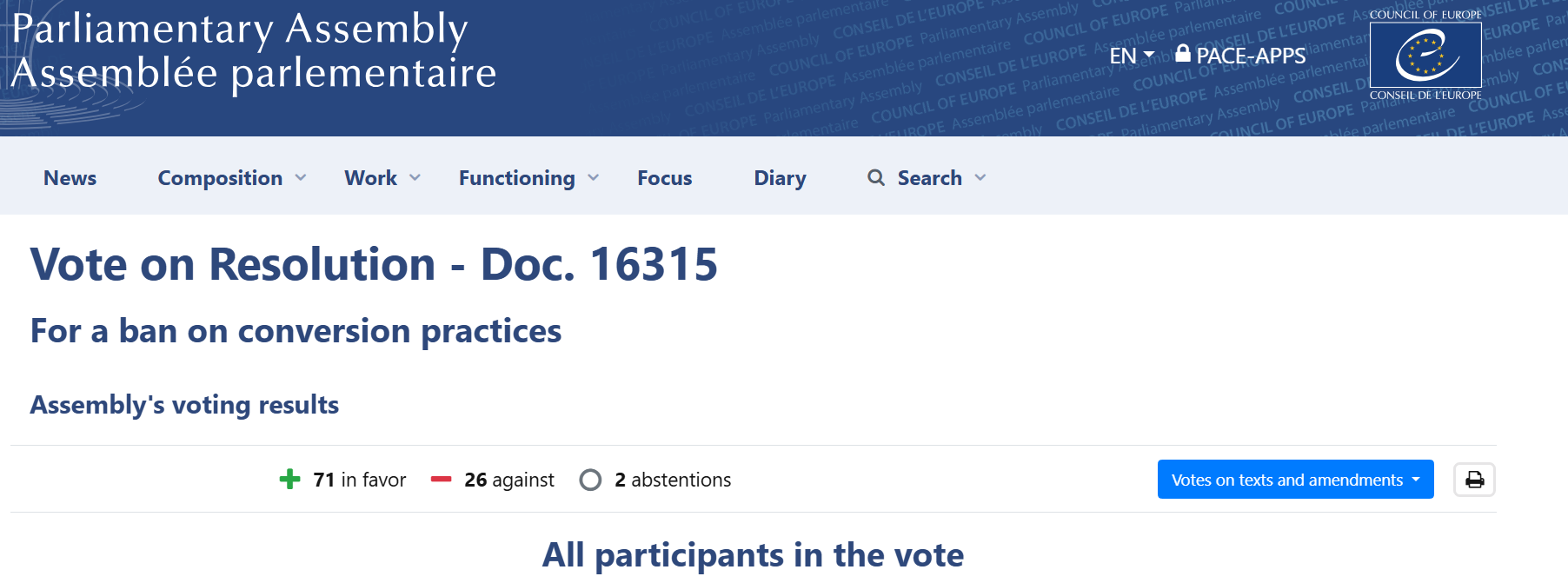
"The Parliamentary Assembly of the Council of Europe consists of 306 members of parliament from the 46 member states; the Assembly elects the Secretary General, the Human Rights Commissioner and the judges to the European Court of Human Rights; it provides a democratic forum [their bold] for debate and monitors elections; its committees play an important role in examining current issues."
Despite these numbers less than one third of delegates were present for the vote. The Athena Forum reported that "Two thirds of the delegates went back home before the vote on Thursday afternoon!"
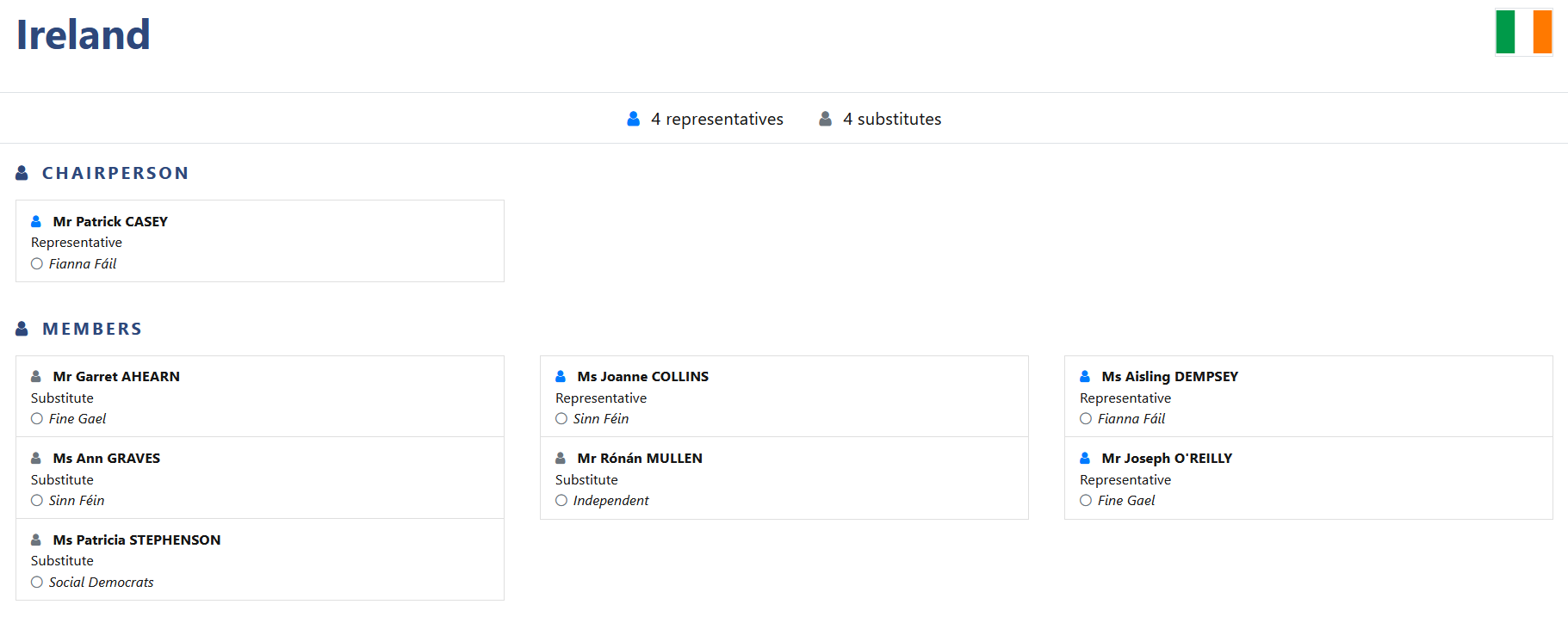
How did the Irish delegates to the PACE contribute and vote yesterday?
Senator Rónán Mullen (Ind) proposed two amendments, Amendment 1's explanatory note said
"This ensures that harmful conversion practices, as commonly understood, are opposed. This substitute text protects against promotion of dangerous hormonal treatments and mutilating surgeries and upholds the right of parents, through education etc., to protect their children from harmful practices."
His second proposed amendment was number 3 which the explanatory note explained
"This amendment protects, inter alia, healthcare and other professionals by upholding evidence-based best practice in healthcare and protects the rights of parents and guardians in education, socialising and matters affecting the welfare of their children."
Senator Joe O'Reilly (FG) supported both of these amendments but Senator Pat Casey (FF) voted against them. Edit 31st January: neither of these were carried nor were any others except:
Edit 31st January:
One amendment was accepted, amendment number 2 which was supported by both Senators Casey and O'Reilly but on which Senator Mullen abstained. Brussels Signal reported yesterday
"The Assembly affirms that a conversion practices ban should not limit supportive interventions by parents or by qualified clinicians providing healthcare services to adults, young people and/or children, nor limit the independence of those interventions, so long as the interventions do not attempt to change, repress, or suppress people."
A sub-amendment was included in the amendment:
“…supportive interventions by parents, organised religious institutions or by qualified clinicians providing healthcare services to adults, young people and/or children…”
But describing this as a "token amendment" Brussels Signal said it "leaves a wide margin for interpretation."
When it came to the resolution itself, Chairperson of the Irish delegates Senator Casey abstained on it and Senator O'Reilly voted for it. Senator Mullen voted against it. The new group Athena Forum which is working to challenge gender ideology at a European level where much of the gender identity ideology activism originates and which is so badly needed commented
"Irish MP Rónán Mullen has been a beacon of light among the cowardice of the last days."
No other Irish representatives appear to have attended the debate or voted on this resolution. But see below:
Second Edit January 31st:
It's been explained that only four members of the eight person Irish delegation would be able to attend and vote in any one debate in the Council of Europe. Those four can either be 'representatives' as, in this case, Senators Casey and O’Reilly, or ‘substitute’ members of the delegation. On Tuesday it should be possible to find out what arrangements representatives and substitutes had made for yesterday's debate and vote.
Both Senators Casey and O'Reilly have been asked for their comments as to why they voted as they did. These will be included below when received.
Writing before the vote was held Stella O'Malley concluded
"Should this resolution pass, it is likely to be seized upon by trans activists across Europe as a mandate for further action. We can expect national legislation, regulatory guidance, and professional rules that extend well beyond the resolution’s original intent. Complaints mechanisms will proliferate, clinicians will practise defensively, and the range of acceptable therapeutic approaches will narrow further. The result will not be better care for vulnerable people."